Work

Automation of nuclear material cladding coating measurement process
Nuclear Research Institute • Bachelor's thesis work
This project began as a solution to the time-intensive manual labeling of microscopy images during my work at the Nuclear Research Institute in Řež. I later expanded it into the focus of my bachelor’s thesis. The core objective was to semi-automate the institute’s coating analysis workflow by integrating a trained U-Net model into their existing process.
A major part of the work involved building a custom dataset from scratch, as no suitable dataset previously existed. The training process, model architecture, and dataset creation are all thoroughly documented in the thesis.
Through this work, I learned how to collect and process data in close collaboration with domain experts, train deep learning models for image segmentation, and integrate them into practical workflows. I gained hands-on experience with Python, OpenCV, PyTorch, Docker, and a range of machine learning tools and libraries.
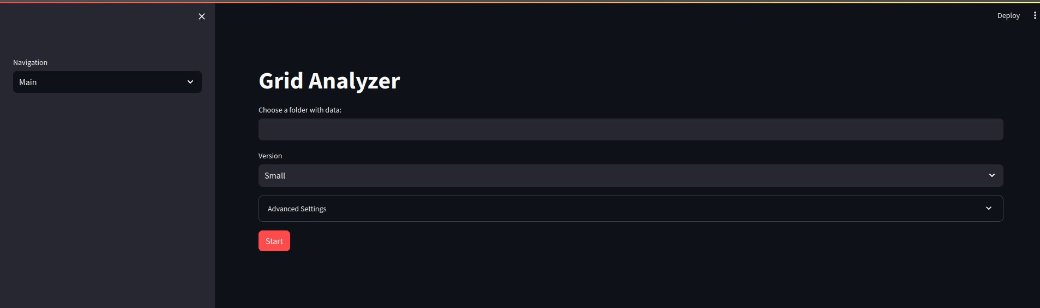
Nanoindent growth measurements + web app
Measurement process automation • web app
This Python-based project focuses on processing image pairs—typically “before” and “after” shots—to analyze changes in a grid-like structure. It calculates the elongation and width differences of grid elements between the two images, providing insights into material deformation. The final work was integrated into a web-app.
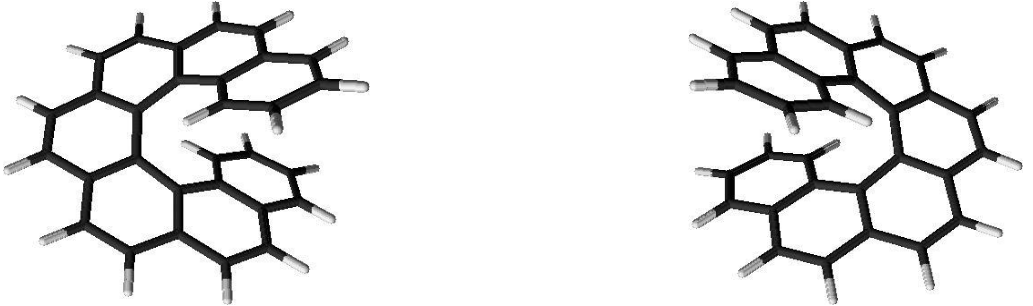
Racemization of n-Helicenes
Computational chemistry: transition states, IR spectra
I worked on the racemization properties of several helicenes, including pentahelicene, hexahelicene, heptahelicene, and dinaphtho[5]helicene. My research focused on calculating racemization barriers, identifying transition states, and analyzing IR spectra.
Along the way, I gained experience with tools like Gaussian, VMD, Avogadro and QuantumATK for molecular modeling and simulation.